1990 — Ph.D., Russian Academy of Sciences — Ecology Science, Ornithology
1983 — Moscow State Pedagogical University — Geography and Biology Teacher
1978 — Moscow English language school #19 — Secondary Education
Professional Experience:
The Animal Evolutionary Morphology and Ecology Institute, from the USSR
Academy of Sciences, Moscow
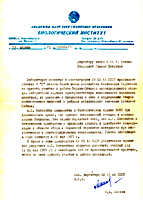
Laboratory engineer, scientist — 1983-1989
Fundamental research in birds communities structure, geographical differences in
communities structure. The subject of scientific research — «Communities structure and
ecological niches of the passerine birds within the forest zone of the European part of
the USSR»
The Institute of the Nature Protection and Reserves, from the USSR Ministry of
Nature Protection and Environment, Moscow
Scientist — 1989-1990
Administrative work in the department of National Parks and Nature Preserves.
The Central Young Naturalists Station, from the Ministry of Education of the
USSR/Russia, Moscow
Deputy Director in Science and Methodology — 1990-1997
Arranging the system of All-Russian Contests of Scientific-research student's works and
field camps in different subjects — ornithology, water ecology, botany. During 1990-1994
there were carried out more than 12 All-Russian Camps and 3 International Youth
Ornithological Camps (USSR/Russia — USA — UK).
Last four years — creating of a new educational form in additional (out-of-school)
education system — «Ecological correspondence school» (School of Distance Education).
Association «Ecosystem», public non-governmental
organization, Moscow
President — August 1994 — present
Network administration
Association «Ecosystem» unite about 2,300 local organizations (Young naturalists
and Young tourists Centers, schools and public environmental groups) including
approximately 78,000 of teachers and students (10-16 years old) throughout the Russian
Federation and former USSR states (see details).
The main idea of Ecosystem's work is providing environmental programs and resource
materials for students and teachers in field studies and scientific investigations.
According to this goal Ecosystem produces and publishes its own resource materials —
«Methods of scientific research in nature» series, resource books, methodical videos and
manuals for teachers, computer and printed field identification guides and so on (see
below in publications section); collects and spreads information about new developments in
environmental formal and non-formal education, about the methods of field studies,
research and practical environmental projects for children, new technologies in education.
Also Ecosystem trains teachers, carrying out conferences, seminars, training courses —
both for formal and non formal sectors, both out-of-school and within the school system,
with the aim of involving them into the field environmental investigation and scientific
research with children.
Moscow Field Studies Center (MFSC) administration
Since 1994 Ecosystem Association runs Moscow Field Studies
Center (MFSC) which situated in the Moscow region
(15 km from Moscow city). The main goal of this Center's work — to organize field
environmental education (EE) for Moscow school-children 11-16 years old. According to this
goal MFSC carry out field ecological practices (for 2-5 days each) to show city students
the real Nature «from inside» and to teach them to investigate their environment
independently and creatively. Also since 1993 as a part of All-Russian
EE network coordination MFSC carry out All-Russian conferences for teachers and
environmental camps for students (totally about 50 last 5 years).
International Cooperation
1997-2006: cooperation with —
co-arranging the International
Distance Courses for teachers “Ecological Field Techniques”. There are 3-4
graduate and postgraduate (in different semesters) seasonal courses, every year from 1999.
1993-2006 cooperation with (UK) — arranging and leading of 12
educational ecology trips of Russian participants (school-students and school teachers) to
different FSC Field Centres.
«Cross-job» Responsibilities:
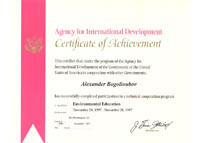
Environmental Science Education
Since 1980 till present time
work as a leading teacher of Environmental Science at the Darwin museum Youth Biological
Club. The main subject of this work — organizing of scientific-research work of the Club
students (20-30 students of 10-17 years old every year) as a form of environmental
education. The main subjects of this work — ornithology and animal communities ecology.
EE Resource materials
Since 1985 till present time work over resource materials for teachers and
students, interested in wildlife and scientific-research work in nature. The main aim of
this work — the adaptation of real scientific methods of field research to the aims of
environmental education of children, writing the methodological brochures, publishing and
spreading them over the Russian Federation.
In this aim in 1996-1998 there were written and published 40
separate brochures, including different approaches and methods of student's scientific
work in nature (see the list of publications below).
Since 1995 Ecosystem provides Russian EE teachers by field guides of different nature
objects — beginning from the rocks and minerals and finishing by lichens and moss. The
most part of these materials going from the Natural History Book Service (UK) and Russian
publishers.
1. Bogolyubov A.S., Preobrashenskaya E.S. The wintering birds population of the Moscow
area per different years. - Theses of the reports of the 2 conference of the young
scientists, Moscow, 1979.
2. Bogolyubov A.S., Preobrashenskaya E.S. Youth and birds monitoring issues of Moscow
and suburban zone. - Youth and ecology of Moscow. The conference, Theses of the reports,
Moscow, 1986, 46-48.
3. Bogolyubov A.S. Structure and ecological niches of chickadees flocks in the Moscow
region forests. - Zoological journal, 1986, 65, ¹ 11, 1664-1674.
4. Bogolyubov A.S., Preobrashenskaya E.S. Ecological niches dynamics of the cheekiness
flocks bird species. - Use and protection of flora and fauna of the USSR. Zoology and
botany. Moscow, 1987, 89-91.
5. Bogolyubov A.S., Preobrashenskaya E.S. Winter space micro- and macro habitats
segregation of passerine birds . - Ecology, 1987, ¹ 3, 53-57.
6. Bogolyubov A.S. Dependence of niches structure and birds communities diversity on
the feed surface square in the forest habitats. - Ecology, 1988, ¹ 5, 57-61.
7. Bogolyubov A.S., Preobrashenskaya E.S. The winter survey and ecological researches
of forest birds at the European part of USSR. - All-Union conference on the problems of
survey of animals, Ufa, 1989, 216-217.
8. Gubin A.G., Preobrashenskaya E.S., Bogolyubov A.S., Vassioukova O.V. Geographical
variability of the winter bird populations of a forest zone at the European part of the
USSR. All-Union conference on the problems of survey of animals, Ufa, 1989, 69-70.
9. Lazareva N.S., Preobrashenskaya E.S., Bogolyubov A.S. Geographical variability of
structures and niches arranging of the chickadees flocks bird species in winter. -
Ecology, 1988, ¹ 4, 34-38.
10. Communities structure and ecological niches of the passerine birds throughout the
forest zone of the European part of the USSR - Dissertation work, The Animal Evolutionary
Morphology and Ecology Institute, from the USSR Academy of Sciences, Moscow, 1989.
11. Bogolyubov A.S. Structure of communities and subroutine linkage of ecological
niches of bird species which are included in chickadees flocks. Ecological ordination and
communities. Moscow: Science, 1990.
Environmental education articles
1. Bogolyubov A.S. Research projects - one of the perspective forms of out-of-school
education work with children. The ecological bulletin of Chuvashiya. Cheboksari, 1995. -
23-25.
2. Bogolyubov A.S. Field ecology: its place and the role in out-of-school (additional)
ecological education of children / Additional education (Monthly informational -
methodical magazine on additional derivation), ¹ 1, 1996 - with. 25-28.
3. Bogolyubov A.S. Association Ecosystem and it activity in the field of nature
education. Biology (application to the newspaper «The first of September »), Moscow,
1996, ¹ 15.
4. Bogolyubov A.S. Field ecological education - one of the forms of out-of-school
environmental education of the schoolchildren. Nontraditional approaches in ecological
derivation of the schoolchildren, Puschino, 1996.
5. Bogolyubov A.S. Field ecology: its role and place in ecological education of
children. The bulletin of ecological derivation, Moscow, 1997.
6. Lazareva N.S., Bogolyubov A.S. Methodical manuals and materials on the ecological
education of children: the directory of resources on practical questions of ecological
education. Moscow: Ecosystem, 1996. - 73.
... and more others, totally more than 250 articles, manuals and books
written in Russian - see the List of
Russian Publications.
Computer and Mobile Identification Field Guides.
During 2002-2018 we have published 13 computer and 25 mobile applications, helping
students, teachers and all nature-lovers to identificate different nature objects in the
field.
EcoGuide: Russian Winter Trees and Shrubs. Identification guide. Application for
PC-Windows, Android and iOS. Alexander Bogolyubov. Moscow, Ecosystem, 2002, 2012.
EcoGuide: Russian Summer Trees and Shrubs. Identification guide. Application for
PC-Windows, Android and iOS. Alexander Bogolyubov. Moscow, Ecosystem, 2002, 2013, 2017.
EcoGuide: Russian Forest Pest Insects. Identification guide. Application for
PC-Windows, Android and iOS. Alexander Bogolyubov. Moscow, Ecosystem, 2002, 2013, 2017.
EcoGuide: Russian Wild Flowers. Identification guide. Application for PC-Windows,
Android and iOS. Alexander Bogolyubov. Moscow, Ecosystem, 2004, 2013, 2017.
EcoGuide: Russian Birds, Songs and Nests. Identification guide. Application for
PC-Windows, Android and iOS. Alexander Bogolyubov. Moscow, Ecosystem, 2006, 2013, 2016.
EcoGuide: Russian Fungi. Identification guide. Application for PC-Windows,
Android and iOS. Alexander Bogolyubov. Moscow, Ecosystem, 2010, 2013, 2016, 2017.
EcoGuide: Russian Fish. Identification guide. Application for PC-Windows, Android
and iOS. Alexander Bogolyubov. Moscow, Ecosystem, 2010, 2013, 2017.
EcoGuide: Russian Amphibians. Identification guide. Application for PC-Windows,
Android and iOS. Alexander Bogolyubov. Moscow, Ecosystem, 2010, 2012, 2017.
EcoGuide: Russian Reptiles. Identification guide. Application for PC-Windows,
Android and iOS. Alexander Bogolyubov. Moscow, Ecosystem, 2010, 2013.
EcoGuide: Russian Mammals. Identification guide. Application for PC-Windows,
Android and iOS. Alexander Bogolyubov. Moscow, Ecosystem, 2010, 2013, 2017.
EcoGuide: Russian Butterflies. Identification guide. Application for PC-Windows,
Android and iOS. Alexander Bogolyubov. Moscow, Ecosystem, 2015, 2017.
EcoGuide: Russian Wild Berries and Fruits. Identification guide. Application for
PC-Windows, Android and iOS. Alexander Bogolyubov. Moscow, Ecosystem, 2017, 2017, 2017.
EcoGuide: Russian Freshwater Invertebrates. Identification guide. Application for
PC-Windows Alexander Bogolyubov. Moscow, Ecosystem, 2018.
EcoGuide: Russian Bird Songs. Identification guide. Application for iOS Alexander
Bogolyubov. Moscow, Ecosystem, 2018.
Ecological Field Studies Techniques (in English) General infrormation about this series
(hyperlinks follow to descriptions and annotations of
the manuals and will open in a new window)
Orienteering in the Forest: Ecological Field
Studies Instructive Manual. Alexander Bogolyubov, Michael Brody. Ecosystem (Russia),
CreekFarm Education Associates (USA), 2003.
Simple “Eye” Survey of the Field Study Site:
Ecological Field Studies Instructive Manual. Alexander Bogolyubov, Michael Brody.
Ecosystem (Russia), CreekFarm Education Associates (USA), 2003.
Procedure of the Geological Exposure Description:
Ecological Field Studies Instructive Manual. Alexander Bogolyubov, Michael Brody.
Ecosystem (Russia), CreekFarm Education Associates (USA), 2003.
Studying Minerals and Rocks in Your Area:
Ecological Field Studies Instructive Manual. Alexander Bogolyubov, Michael Brody.
Ecosystem (Russia), CreekFarm Education Associates (USA), 2003.
Plotting a Profile of a River Valley Slope:
Ecological Field Studies Instructive Manual. Alexander Bogolyubov, Michael Brody.
Ecosystem (Russia), CreekFarm Education Associates (USA), 2003.
Simple Procedure of Soil Description: Ecological
Field Studies Instructive Manual. Alexander Bogolyubov, Michael Brody. Ecosystem (Russia),
CreekFarm Education Associates (USA), 2003.
Study of Snow Cover Profile: Ecological Field
Studies Instructive Manual. Alexander Bogolyubov, Michael Brody. Ecosystem (Russia),
CreekFarm Education Associates (USA), 2003.
Integrated Study Based on Landscape Profile:
Ecological Field Studies Instructive Manual. Alexander Bogolyubov, Michael Brody.
Ecosystem (Russia), CreekFarm Education Associates (USA), 2003.
Study of Species Composition and Number of Fungi:
Ecological Field Studies Instructive Manual. Alexander Bogolyubov, Michael Brody.
Ecosystem (Russia), CreekFarm Education Associates (USA), 2003.
Making a Herbarium: Ecological Field Studies
Instructive Manual. Alexander Bogolyubov, Michael Brody. Ecosystem (Russia), CreekFarm
Education Associates (USA), 2003.
The Study of Plants in Your Local Environment:
Ecological Field Studies Instructive Manual. Alexander Bogolyubov, Michael Brody.
Ecosystem (Russia), CreekFarm Education Associates (USA), 2003.
Mapping Forest Vegetation: Ecological Field
Studies Instructive Manual. Alexander Bogolyubov, Michael Brody. Ecosystem (Russia),
CreekFarm Education Associates (USA), 2003.
Study of the Vertical Structure of a Forest:
Ecological Field Studies Instructive Manual. Alexander Bogolyubov, Michael Brody.
Ecosystem (Russia), CreekFarm Education Associates (USA), 2003.
Green Plants Under Snow: Ecological Field
Studies Instructive Manual. Alexander Bogolyubov, Michael Brody. Ecosystem (Russia),
CreekFarm Education Associates (USA), 2003.
Study of the Ecology of Early Flowering Plants:
Ecological Field Studies Instructive Manual. Alexander Bogolyubov, Michael Brody.
Ecosystem (Russia), CreekFarm Education Associates (USA), 2003.
Phenology of Plant Florescence: Ecological
Field Studies Instructive Manual. Alexander Bogolyubov, Michael Brody. Ecosystem (Russia),
CreekFarm Education Associates (USA), 2003.
Assessment of the Vital State of Coniferous Underbrush: Ecological Field Studies
Instructive Manual. Alexander Bogolyubov, Michael Brody. Ecosystem (Russia), CreekFarm
Education Associates (USA), 2003.
Let's Help Birds!: Ecological Field Studies
Instructive Manual. Alexander Bogolyubov, Michael Brody. Ecosystem (Russia), CreekFarm
Education Associates (USA), 2003.
Studies of the Day Activity of Singing Birds:
Ecological Field Studies Instructive Manual. Alexander Bogolyubov, Michael Brody.
Ecosystem (Russia), CreekFarm Education Associates (USA), 2003.
Study of Birds' Nesting Life: Ecological Field
Studies Instructive Manual. Alexander Bogolyubov, Michael Brody. Ecosystem (Russia),
CreekFarm Education Associates (USA), 2003.
Study of Mammal Ecology According to Their Tracks:
Ecological Field Studies Instructive Manual. Alexander Bogolyubov, Michael Brody.
Ecosystem (Russia), CreekFarm Education Associates (USA), 2003.
Study of Plankton: Ecological Field Studies
Instructive Manual. Alexander Bogolyubov, Michael Brody. Ecosystem (Russia), CreekFarm
Education Associates (USA), 2003.
Study of Fauna of Spring Temporary Water Bodies:
Ecological Field Studies Instructive Manual. Alexander Bogolyubov, Michael Brody.
Ecosystem (Russia), CreekFarm Education Associates (USA), 2003.
Making a Campfire: Ecological Field Studies
Instructive Manual. Alexander Bogolyubov, Michael Brody. Ecosystem (Russia), CreekFarm
Education Associates (USA), 2003.
Ecological Field Techniques Instructional Video (in English)
General information about this series
(hyperlinks follow to descriptions and annotations of
these video and will open in a new window)
I. Ecological Field Techniques Instructional Videos. Part 1: Autumn season. Ecosystem
(Russia), CreekFarm Education Associates (USA), 2004.
Orientation to Local Habitat and Study Site:
Ecological Field Techniques Instructional Video. Alexander Bogolyubov, Michael Brody.
Ecosystem (Russia), CreekFarm Education Associates (USA), 2004.
Description of Geological Exposure: Ecological
Field Techniques Instructional Video. Alexander Bogolyubov, Michael Brody. Ecosystem
(Russia), CreekFarm Education Associates (USA), 2004.
Profile of River Valley Slope: Ecological Field
Techniques Instructional Video. Alexander Bogolyubov, Michael Brody. Ecosystem (Russia),
CreekFarm Education Associates (USA), 2004.
Soil Profile Pit: Ecological Field Techniques
Instructional Video. Alexander Bogolyubov, Michael Brody. Ecosystem (Russia), CreekFarm
Education Associates (USA), 2004.
Species Composition and Abundance of Fungi:
Ecological Field Techniques Instructional Video. Alexander Bogolyubov, Michael Brody.
Ecosystem (Russia), CreekFarm Education Associates (USA), 2004.
Integrated Study of Landscape Profile: Ecological
Field Techniques Instructional Video. Alexander Bogolyubov, Michael Brody. Ecosystem
(Russia), CreekFarm Education Associates (USA), 2004.
Environmental Assessment of Human Impact:
Ecological Field Techniques Instructional Video. Alexander Bogolyubov, Michael Brody.
Ecosystem (Russia), CreekFarm Education Associates (USA), 2004.
II. Ecological Field Techniques Instructional Videos. Part 2: Winter season. Ecosystem
(Russia), CreekFarm Education Associates (USA), 2004.
Making a Fire for Winter Survival: Ecological Field
Techniques Instructional Video. Alexander Bogolyubov, Michael Brody. Ecosystem (Russia),
CreekFarm Education Associates (USA), 2004.
Simple Survey of Field Study Site: Ecological Field
Techniques Instructional Video. Alexander Bogolyubov, Michael Brody. Ecosystem (Russia),
CreekFarm Education Associates (USA), 2004.
Growth Dynamics of Trees: Ecological Field
Techniques Instructional Video. Alexander Bogolyubov, Michael Brody. Ecosystem (Russia),
CreekFarm Education Associates (USA), 2004.
Forest Mapping: Ecological Field Techniques
Instructional Video. Alexander Bogolyubov, Michael Brody. Ecosystem (Russia), CreekFarm
Education Associates (USA), 2004.
Green Plants under Snow Cover Ecological Field
Techniques Instructional Video. Alexander Bogolyubov, Michael Brody. Ecosystem (Russia),
CreekFarm Education Associates (USA), 2004.
Territorial Behavior of Titmouse Flocks: Ecological
Field Techniques Instructional Video. Alexander Bogolyubov, Michael Brody. Ecosystem
(Russia), CreekFarm Education Associates (USA), 2004.
Winter Route Census of Mammals: Ecological Field
Techniques Instructional Video. Alexander Bogolyubov, Michael Brody. Ecosystem (Russia),
CreekFarm Education Associates (USA), 2004.
Mammal Ecology According to Winter Tracking:
Ecological Field Techniques Instructional Video. Alexander Bogolyubov, Michael Brody.
Ecosystem (Russia), CreekFarm Education Associates (USA), 2004.
Physical and Chemical Properties of Natural Waters
Ecological Field Techniques Instructional Video. Alexander Bogolyubov, Michael Brody.
Ecosystem (Russia), CreekFarm Education Associates (USA), 2004.
Snow Cover Profile: Ecological Field Techniques
Instructional Video. Alexander Bogolyubov, Michael Brody. Ecosystem (Russia), CreekFarm
Education Associates (USA), 2004.
III. Ecological Field Techniques Instructional Videos. Part 3: Spring season. Ecosystem
(Russia), CreekFarm Education Associates (USA), 2004.
Helping Native Birds: Ecological Field Techniques
Instructional Video. Alexander Bogolyubov, Michael Brody. Ecosystem (Russia), CreekFarm
Education Associates (USA), 2004.
Early Flowering Plants Ecological Field Techniques
Instructional Video. Alexander Bogolyubov, Michael Brody. Ecosystem (Russia), CreekFarm
Education Associates (USA), 2004.
Spring Flowers: Ecological Field Techniques
Instructional Video. Alexander Bogolyubov, Michael Brody. Ecosystem (Russia), CreekFarm
Education Associates (USA), 2004.
Vital State of Coniferous Underbrush Ecological
Field Techniques Instructional Video. Alexander Bogolyubov, Michael Brody. Ecosystem
(Russia), CreekFarm Education Associates (USA), 2004.
Studying Rocks and Minerals in Your Area:
Ecological Field Techniques Instructional Video. Alexander Bogolyubov, Michael Brody.
Ecosystem (Russia), CreekFarm Education Associates (USA), 2004.
Daily Bird Song Activity: Ecological Field
Techniques Instructional Video. Alexander Bogolyubov, Michael Brody. Ecosystem (Russia),
CreekFarm Education Associates (USA), 2004.
Bird Census Methods: Ecological Field Techniques
Instructional Video. Alexander Bogolyubov, Michael Brody. Ecosystem (Russia), CreekFarm
Education Associates (USA), 2004.
Fauna of Vernal Pools: Ecological Field Techniques
Instructional Video. Alexander Bogolyubov, Michael Brody. Ecosystem (Russia), CreekFarm
Education Associates (USA), 2004.
IV. Ecological Field Techniques Instructional Videos. Part 4: Summer season. Ecosystem
(Russia), CreekFarm Education Associates (USA), 2004.
Making a School Herbarium: Ecological Field
Techniques Instructional Video. Alexander Bogolyubov, Michael Brody. Ecosystem (Russia),
CreekFarm Education Associates (USA), 2004.
Flora Inventory: Ecological Field Techniques
Instructional Video. Alexander Bogolyubov, Michael Brody. Ecosystem (Russia), CreekFarm
Education Associates (USA), 2004.
Vertical Structure of a Forest: Ecological Field
Techniques Instructional Video. Alexander Bogolyubov, Michael Brody. Ecosystem (Russia),
CreekFarm Education Associates (USA), 2004.
Aquatic Invertebrates and Environmental Status:
Ecological Field Techniques Instructional Video. Alexander Bogolyubov, Michael Brody.
Ecosystem (Russia), CreekFarm Education Associates (USA), 2004.
Plankton in the Littoral Zone of a Water-body:
Ecological Field Techniques Instructional Video. Alexander Bogolyubov, Michael Brody.
Ecosystem (Russia), CreekFarm Education Associates (USA), 2004.
Books in English
All books, written by Alexander Bogolyubov on the author page on the Amazon.com
(hyperlinks follow to the books pages on Amazon and will open in a new window)
Alexander Bogolyubov, Michael Brody,
Tatiana Tatarinova. eBook Kindle Direct Publishing / Amazon, 2019. - 245 pp. ASIN:
B082RCDS4D
Alexander Bogolyubov, Michael Brody,
Tatiana Tatarinova. Paperback Kindle Direct Publishing / Amazon, 2019. - 202 pp. ISBN-10:
1675453004, ISBN-13: 978-1675453001
Alexander Bogolyubov, Michael Brody,
Tatiana Tatarinova. eBook Kindle Direct Publishing / Amazon, 2019. - 207 pp. ASIN:
B082WJF376
Alexander Bogolyubov, Michael Brody,
Tatiana Tatarinova. Paperback Kindle Direct Publishing / Amazon, 2019. - 171 pp. ISBN-10:
1677219661, ISBN-13: 978-1677219667
Alexander Bogolyubov, Michael Brody,
Tatiana Tatarinova. eBook Kindle Direct Publishing / Amazon, 2019. - 250 pp. ASIN:
B082ZPP9GF
Alexander Bogolyubov, Michael Brody,
Tatiana Tatarinova. Paperback Kindle Direct Publishing / Amazon, 2019. - 204 pp. ISBN-10:
1679394916, ISBN-13: 978-1679394911
Alexander Bogolyubov, Michael Brody,
Tatiana Tatarinova. eBook Kindle Direct Publishing / Amazon, 2019. - 235 pp. ASIN:
B0834WWWN2
Alexander Bogolyubov, Michael Brody,
Tatiana Tatarinova. Paperback Kindle Direct Publishing / Amazon, 2019. - 208 pp. ISBN-10:
1651141045, ISBN-13: 978-1651141045
Alexander Bogolyubov, Michael Brody, Tatiana Tatarinova. eBook Kindle Direct Publishing /
Amazon, 2020. - 271 pp. ASIN: B083KMGK9H
Alexander Bogolyubov, Michael Brody, Tatiana Tatarinova. Paperback Kindle Direct Publishing /
Amazon, 2020. - 224 pp. ISBN-10: 1657116182, ISBN: 9781657116184
Alexander Bogolyubov, Michael Brody, Tatiana Tatarinova. eBook Kindle Direct Publishing /
Amazon, 2020. - 272 pp. ASIN: B083QB3WCP
Alexander Bogolyubov, Michael Brody, Tatiana Tatarinova. Paperback Kindle Direct Publishing /
Amazon, 2020. - 219 pp. ISBN-10: 165909240X, ISBN: 9781659092400
Alexander Bogolyubov, Michael Brody, Tatiana Tatarinova. eBook Kindle Direct Publishing /
Amazon, 2020. - 256 pp. ASIN: B083V61NCV
Alexander Bogolyubov, Michael Brody, Tatiana Tatarinova. Paperback Kindle Direct Publishing /
Amazon, 2020. - 208 pp. ISBN-10: 1660990378, ISBN: 9781660990375
Alexander Bogolyubov, Michael Brody, Tatiana Tatarinova. eBook Kindle Direct Publishing /
Amazon, 2020. - 159 pp. ASIN: B083XXJW72
Alexander Bogolyubov, Michael Brody, Tatiana Tatarinova. Paperback Kindle Direct Publishing /
Amazon, 2020. - 122 pp. ISBN 9798600046702
Alexander Bogolyubov, Michael Brody, Tatiana Tatarinova. eBook Kindle Direct Publishing /
Amazon, 2020. - 206 pp. ASIN: B083ZHXMSC
Alexander Bogolyubov, Michael Brody, Tatiana Tatarinova. Paperback Kindle Direct Publishing /
Amazon, 2020. - 166 pp. ISBN 9798600544550
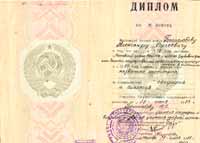
Moscow State Pedagogical University (Moscow), Geography and Biology Dept.
– 1978-1983
Geography and Biology Teacher diploma – 1983
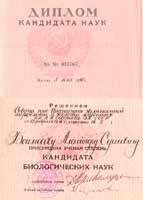
Postgraduate Education at Animal Evolutionary Morphology and Ecology
Institute (USSR Academy of Sciences, Moscow) – 1986-1989
Ph.D. degree – ecology (“candidate of biological sciences”) — 1990
7. Language skills: Indicate competence on a scale of 1 to 5
(1 — excellent; 5 — basic)
Language
Reading
Speaking
Writing
Russian
1
1
1
English
2
3
2
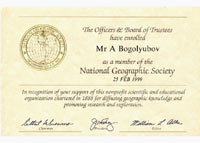
8. Membership of professional bodies: President of Eurasian
Association of Youth Environmental Groups “Ecosystem”, Member of Russian Bird
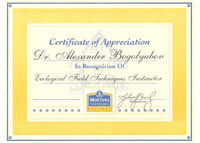
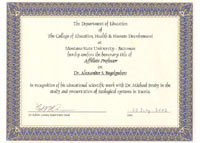
Conservation Union, Member of National Geographic Society, Affiliate Professor of the
Montana State University, USA
9. Other skills: Fully computer literate, biology and ecology
teaching
10. Present position: 1) President of Eurasian
Association of Youth Environmental Groups “Ecosystem”, 2) Director of the Moscow Field
Ecology Education Centre.
11. Years within the firm: from 1994
12. Key qualifications:
• More than 40 years of experience in the field of environmental
education;
• Experience in raising the level of environmental education in Russia
and improving the current system of ecological education
• Created an international distance learning system on “Ecological
Field Techniques”
13. Specific experience in the region:
Country
Date from — Date to
Russian Federation
from 1983
USA
from 1991
UK
from 1993
14. Professional experience
Date
Location
Company
Position
Description
1996-ongoing (2008)
Moscow, Russia
Moscow Field Ecology Education Centre “Ecosystem”
Director
I manage and mentor all the activities of this non-governmental and non-commercial educational
organization that works as a “field forest station”, where school-students from
the Moscow-city live for 3-4 days at a time and study nature according to our programmes
and with our teachers. About 3000 Moscow school-students pass through our Centre each year
(last 7 years). Also we gather and arrange All-Russian Camps for Young Ecologists of
different specialisation (during 1996-2002 we have arranged 34 All-Russian Camps in the
Centre with 30-50 participants each)(totally from 220 towns and cities). About 2-5 times a
year we arrange workshops and pedagogical seminars for Moscow-city biology and geography
teachers (20-30 participants each). My main responsibilities in the Centre include:
curriculum development; planning and preparation of the classes; contacting schools and
other institutions and organisations; supporting and advising teachers and other staff on
their educational responsibilities; arranging and supervising field visits, activities and
practices; managing finances; other duties necessary to the Centre’s operations.
1997-ongoing (2008)
Bozeman, Montana, USA
Montana State University, College of Education, Health and Human Development,
Department of Education
Affiliate Professor
Co-organise and advise on International Distance Courses for teachers on
“Ecological Field Techniques”; educational curriculum development; creating and
organising all supporting materials, such as written manuals and videos; mentoring Russian
students and monitoring their learning progress.
I also manage the International USA-Russian teacher’s field ecology education programme
and joint expeditions, including liaising with teachers from the USA and Russia and their
organisations, and arranging several joint field trips, three expeditions through Russia
and two international workshops at the Ecosystem Centre.
1993-ongoing (2008)
UK
Field Studies Council (FSC)
Russian environmental groups Coordinator
My responsibilities have included planning, organising, coordinating, managing and
leading 12 educational ecology trips with Russian participants (school students and
teachers) to various FSC Field Centres to raise awareness of environmental issues
internationally. I am responsible for the successful running of the trips; supporting the
environmental teachers and organising the workload; gathering the Russian students;
obtaining necessary administrative and supporting documents in Russia; guiding the groups
and organising the agenda; and interpreting and translating during their stay in UK.
1994-2000
Moscow, Russia
Eurasian Association of Youth Environmental Groups “Ecosystem”
President
I established, managed and coordinated the work of this non-governmental,
non-commercial public organization of Russian teachers, using “outdoor” education in
schools and in the additional education system to raise environmental awareness, as well
as to find ways to improve and harmonise environmental education in Russia. My
responsibilities included: contacting and liaising with association members (3500 teachers
and 72000 school-students) as well as other organisations, schools and institutions;
managing the association’s programme on raising environmental awareness; managing,
coordinating and monitoring the department’s work; and supporting administratively
the association.
1990-1995
Moscow, Russia
Central Station of Young Naturalists (Federal Managing Institution of the Russian
Ministry of Education)
Deputy Director
I managed and coordinated Out-of-School System of Ecology and Biology
(Additional) Education. My responsibilities were: 1) arranging All-Russian Contests on
ecology and the environment. During 5 years I have arranged and managed 15 All-Russian
Contests of Young Researchers (300-500 participants each) on different ecology and
environmental subjects, and 3 All-Russian Contests of Young Ecologists (about 1000
participants each); 2) organising the All-Russian Field Camps for school students (during
5 years I arranged and leaded 12 All-Russian Camps with 60-300 participants each); 3)
arranging and leading the All-Russian School of Distance Ecology Education for
school-students (I elaborated the educational program, annual schedule of the school and
managed it for 3 years)(there were 200-600 students in the school), 4) liaising with many
kindergartens, schools and colleges on the above-mentioned issues in order to create,
coordinate and harmonise continuous environmental education in Russia.
1983-1990
Moscow, Russia
Animal Evolutionary Morphology and Ecology Institute (USSR Academy of Sciences)
Scientist
I worked on the bird communities ecology (ecological niches) issues, arranging
field expeditions all over European part of the USSR (and involving school students from
Darwin Museum Club in these activities). I taught environmental and wildlife issues
to children and teenagers.
1978-1990
Moscow, Russia
Moscow State Darwin’s Museum – School Biological Club
Teacher
I taught environmental education to children and teenagers; raised awareness on
the environment and ecology; planned and managed lessons and classes; organised and led
students’ field investigations and expeditions; organised all kind of events, from field
visits and investigations to theme days for students of all ages, parents and teachers;
researched, analysed and elaborated learning materials for the students; adapted learning
materials to the various age groups of the students; liaised with schools and parents
associations regarding environmental issues.



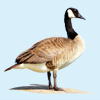

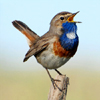
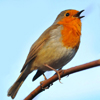

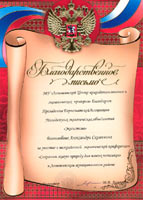
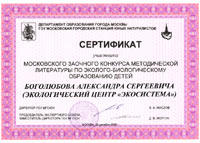
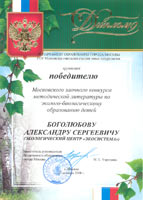
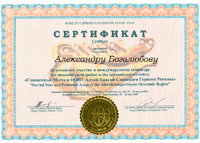
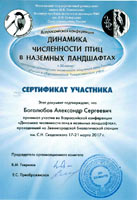
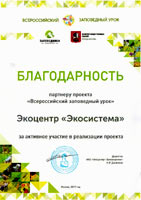
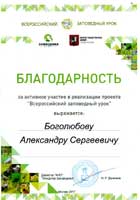
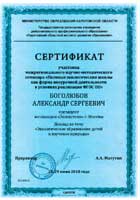
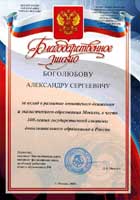
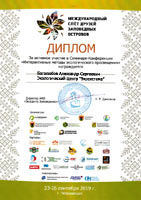
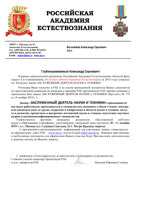
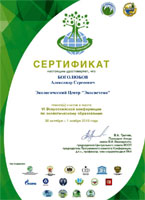
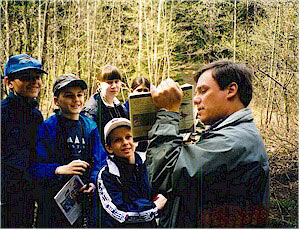 Since 1980 till present time
work as a leading teacher of Environmental Science at the Darwin museum Youth Biological
Club. The main subject of this work — organizing of scientific-research work of the Club
students (20-30 students of 10-17 years old every year) as a form of environmental
education. The main subjects of this work — ornithology and animal communities ecology.
Since 1980 till present time
work as a leading teacher of Environmental Science at the Darwin museum Youth Biological
Club. The main subject of this work — organizing of scientific-research work of the Club
students (20-30 students of 10-17 years old every year) as a form of environmental
education. The main subjects of this work — ornithology and animal communities ecology.